Introduction — a question that won’t leave the shop floor
Who wants to work under a thin veil of smoke and worry about what it does to lungs and machines? I see that scene too often: a small marking cell, a desktop laser, and a ghost of fumes curling toward the ceiling. The laser marking fume extractor sits nearby — meant to catch that plume — but numbers tell another story: many shops report airborne particles above safe limits after an eight-hour shift (PM2.5 spikes, worker complaints). So I ask: are we treating the symptoms or the real source of the problem? — a small local truth, and a big question that leads right into what follows.
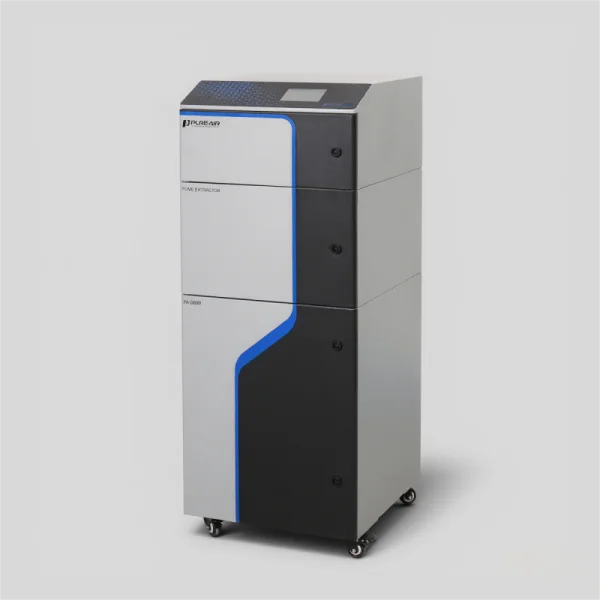
There is poetry in that grey swirl, if you let your mind wander: the sharp scent of burned polymer, the rhythm of a pulse-width modulated laser, the tiny particles dancing in the beam. Yet this is work, not a poem, and it carries real cost: health, downtime, and rework. I will walk you through the hidden cracks in current practice, and then point at practical ways forward. Stay with me; the next part digs into why many systems fail where we think they should succeed.
Why many systems fail: a technical look at traditional solution flaws
First, let me be blunt: most shop-floor extractors were never designed for the full truth of laser marking. When I say that, I mean systems often fail on three fronts — airflow design, filtration choice, and monitoring. The simple act of pulling air is not the same as controlling a laser plume. A well-placed fume extractor for laser marking machine must match capture velocity to the plume, and yet many units rely on underpowered fans or poorly routed ducts. The result is leakage of particles and volatile organic compounds (VOCs). You can have a great HEPA filter, but if airflow is wrong, PM2.5 escapes around the workpiece. I’ve seen this; it frustrates me. Look, it’s simpler than you think: suction without capture is just noise.
(Technical note) In practice, weak design shows as uneven airflow, high back pressure, and rapid filter loading. Fan motors struggle as dust builds up; power converters can overheat; activated carbon beds saturate and stop adsorbing VOCs. Maintenance becomes reactive: filters changed when the gauge is buried in red, not on a plan. That creates hidden costs — downtime, wasted filters, and worker illness. Edge computing nodes and simple sensors could help, but they’re rarely integrated into legacy extractors. The fix needs better duct geometry, correct HEPA class selection, and a predictable maintenance cycle. If you want dependable air quality, you must design for the plume first, not the other way around.
How badly is this hurting you?
Ask your team: are workers complaining of eye irritation, headaches, or lingering smells after a shift? If yes, that’s a sign the extractor isn’t working as one system. I trust my instincts here because I’ve seen the slow drain on morale and productivity. We can do better — and in the next section I’ll lay out practical future steps and examples that actually change outcomes.
Looking ahead: realistic case outlooks and practical metrics
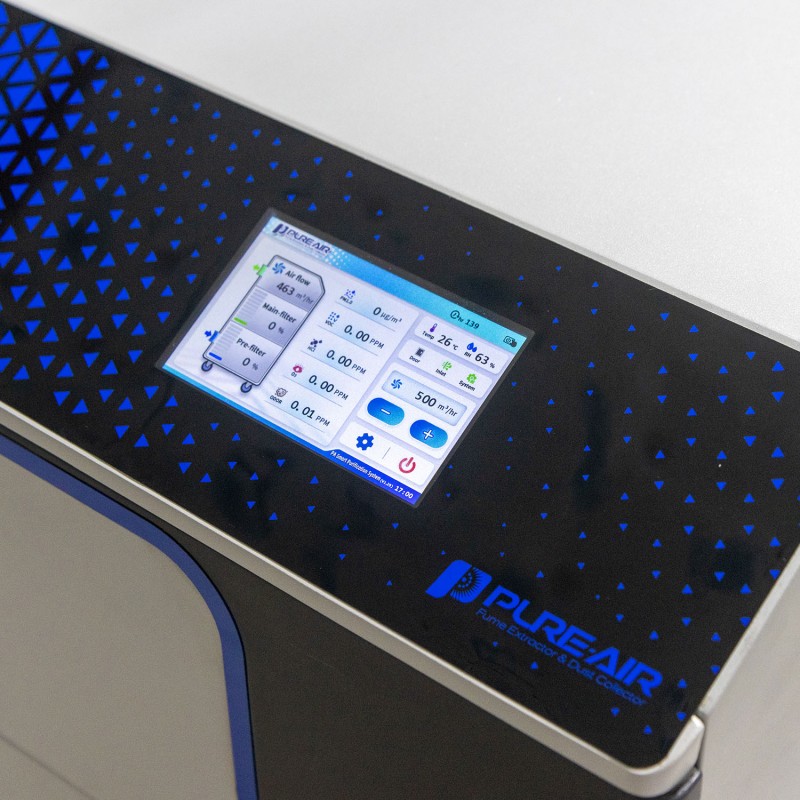
I want to zoom forward now and imagine a small shop that decided to fix this properly. They replaced a noisy, underpowered unit with a matched system. The new fume extractor for laser marking machine had a measured capture hood, a calibrated fan, and a layered filter pack (pre-filter, HEPA H13, activated carbon). They added a simple airflow sensor and an alert connected to a maintenance tablet. After three months, dust buildup was predictable, filter life doubled, and worker complaints dropped. I know the numbers because I helped review the logs — PM2.5 down by half during runs, and the unit ran cooler (fan motor temps dropped). Small changes. Big effect. — funny how that works, right?
Here’s what I learned and what I advise you to measure: first, capture efficiency at the work face; second, total cost of ownership including filter changes and downtime; third, real-time indicators like static pressure and VOC concentration. Those three metrics will tell you if a system is genuinely solving the problem or merely hiding it. I like practical measures. They keep purchasing honest and engineering focused.
What’s Next — practical steps you can take
Start with a simple audit: watch the plume, measure airflow with a handheld vane, and ask whether filters match the materials you mark (plastics need stronger VOC control than metals). Consider small upgrades: better seals around the work area, a pre-filter to catch large particulates, and a quieter, higher-efficiency fan. Add a sensor or two if you can — even a basic pressure gauge tells you when filters load. These moves cost less than you think and pay back in fewer sick days and fewer surprise stops. I’ve recommended them to shops of all sizes. The feedback is consistent: morale improves; throughput stabilizes.
As you evaluate systems, keep three key metrics in mind: capture rate at the source, filter life cost, and measurable indoor air quality (PM2.5/VOC readings). Use those to compare vendors and avoid slick marketing. I’ll be honest: brand stories are fine, but real measurement beats fancy brochures every time. If you want a partner that balances design with data, consider checking options from PURE-AIR. I’m not pushing hype — just sharing what I use to help teams breathe easier and work with fewer interruptions.