Introduction: A Clear Lens on Control
Let’s set the scene: a busy cross-dock, night shift, pallets moving like river water, but orders still pile up by dawn. The amr controller sits at the heart of that flow. In this mix, the mobile robot controller is the brain, blending sensor fusion, SLAM maps, and motor control while chatting over CAN bus to every actuator. Numbers don’t lie—20% idle time, 3-second decision lag, and bottlenecks near high-traffic aisles. So, why the slow creep in cycle time when you already added more bots, more beacons, more rules? (Wi, bagay sa yo konn fache.) The real question: what’s inside the controller loop that makes or breaks your floor throughput and safety margins?
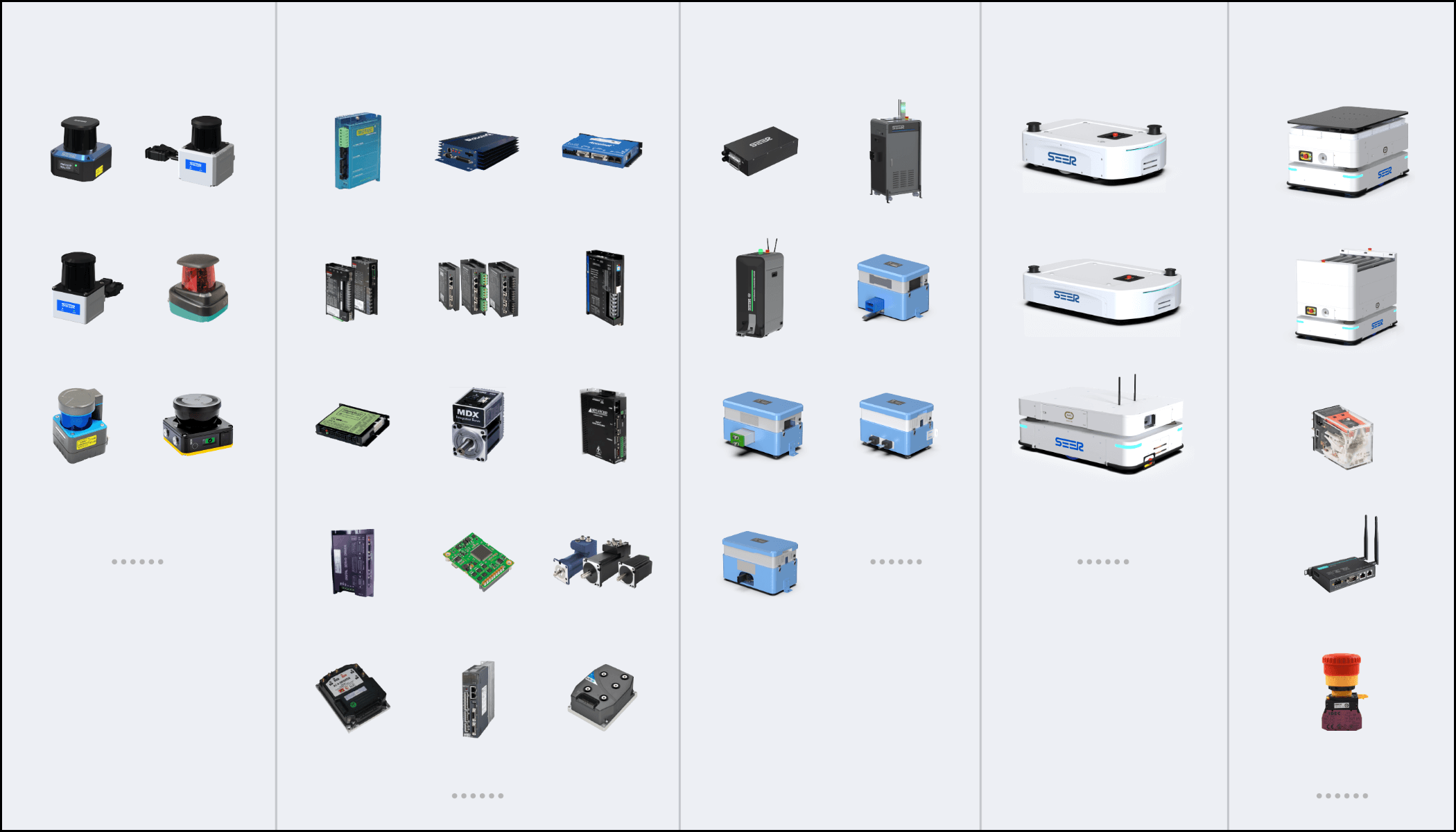
Here’s the technical core. A solid controller synchronizes LiDAR returns, odometry, and IMU data under a real-time OS, then pushes clean velocity setpoints into drives through stable power converters. Look, it’s simpler than you think—and harder in the details. If timing jitter rises, path tracking drifts. If filtering is off, SLAM gets noisy. If firmware ties up the loop, faults stack. And the small stuff—task priorities, watchdogs, CAN arbitration—becomes big. That’s where many sites hit a ceiling. Let’s unpack the deeper layer, the one that hides behind “it’s working” dashboards and vague alarms, and see what really slows your fleet—then we move forward to what fixes it next.
Hidden Friction: Why Traditional Control Misses the Mark
Where do the old setups fall short?
Legacy stacks often rely on polling loops and monolithic code. On paper, they move. In practice, they wobble. Add one more sensor, and queue delay grows; add one more task, and watchdogs bark. Without ROS 2 and QoS profiles, messages starve in bursts. CAN bus traffic spikes, and arbitration steals precious milliseconds. Dead-reckoning drifts after small bumps; odometry error hits turns; a rushed PID tuning session “fixes” it—until payloads change. EMI shielding gets ignored near weld lines and chargers, so the controller catches a glitch and the robot brakes mid-aisle—funny how that works, right?
Then there’s the human part. Operators need a clear fault tree, not a cryptic code page. Fleet orchestration wants clean APIs, not one-off scripts. Old controllers bundle everything into a single thread, so one map update blocks motion planning. Blocking equals lag. Lag equals near-misses. Safety PLCs need deterministic handshakes; without them, you overcompensate and slow all robots. Too many sites accept 99.0% “mission success” while ignoring the 1% that creates 80% of delays. The pain is quiet but real: missed docks, backup beeps, and techs called at 2 a.m. because a minor sensor hiccup kills a route. That’s not bad luck; it’s design debt piling up.
What’s Next: New Principles for Smarter Autonomy
What’s Next
The next wave rethinks the loop. Event-driven schedulers replace big polling cycles, and microservices carve motion, perception, and safety into fault-tolerant blocks. With edge computing nodes near the floor, the mobile robot controller can offload heavy maps and still keep a 10 ms control loop. Model predictive control (MPC) improves trajectory tracking when aisles crowd. ROS 2 with tuned QoS stops message starvation. Sensor fusion blends LiDAR, camera depth, and wheel encoders to cut drift, while dynamic replanning keeps paths fresh without freezing the drive. OTA updates roll in safely—canary first, fleet later. And a safety PLC handles hard stops fast, but without choking the navigation thread (small detail, huge gain).
The design pattern is simple: isolate risk, cap latency, and surface health. Use time-synchronized SLAM, not ad hoc map hacks. Add EMI-aware wiring and grounding so power converters don’t inject noise into encoders. Standardize VDA 5050 or clean APIs for fleet orchestration; don’t bury integrations in scripts. Plan around worst-case jitter, not best-case demos—because real floors get messy. Even better, build a digital twin to test corner cases before rollout. When traffic spikes, your controller shrugs instead of stalls—funny how that calms everything, right? From there, small wins stack: fewer emergency stops, smoother turns, and better battery life per mission.
How to Choose: Three Metrics That Keep You Honest
Use these practical checks when you weigh controllers on a live floor, not in a slide deck. 1) Control-loop latency and jitter: demand sub-10 ms loops with bounded jitter under load; verify with logs during peak traffic. 2) Fault isolation and recovery: prove that a bad sensor or SLAM hiccup degrades gracefully—no fleet-wide stalls, MTTR under 30 minutes, safety stop reaction under 50 ms. 3) Fleet-aware throughput: measure aisle capacity and mission success at 99.95% with mixed payloads, while ROS 2 QoS stays stable and CAN bus errors stay near zero. Keep it plain: if these numbers hold, uptime rises and downtime drops. If they don’t, the rest is just talk. For deeper learning and tools that fit these principles, see SEER Robotics.